Looking for Spanish games for high school that keep students focused, communicative Spanish activities that get teenagers talking, or fresh ideas for teaching Spanish culture? My friend Kellie Ann from La Clase Animada has spent the last 17 years refining lessons that do exactly that.
Have you ever looked at the classroom clock and realized you have exactly seven minutes left in the period, but twenty minutes of material left to cover?
Pacing a language class can feel impossible. Some days you're rushing to squeeze everything in before the bell. Other days you're staring at ten unexpected minutes with a room full of teenagers.
Kellie Ann Jacobson from La Clase Animada has spent 17 years figuring out how to make lessons flow naturally. From classroom trust to lesson timing to keeping students engaged, she shared some of her favorite strategies—and a few stories from her own teaching journey.
More...

"Whenever a lesson goes perfectly, I know that my students feel a lot of trust in each other to fail and bounce back. They are also trusting me that they can make a mistake without getting in trouble."
Kellie Ann teaches outside of Des Moines, Iowa, where she has taught everything from Spanish I to Spanish IV. She has a genuine superpower when it comes to class timing, incredible insights on building classroom trust, and a hilarious story about why she became a teacher in the first place.
Here's what she had to say.
An Unexpected Reason To Become a Spanish Teacher
Every language teacher has a specific "why." For some, it was a study abroad semester that changed everything. For others, it was a dynamic mentor who made the language click. For Kellie Ann, it was a mix of the absolute best and the absolute worst of her own high school experience.
"I had one great Spanish teacher who instilled a love of language and culture," she shares. "And I had two horrible ones."
How bad are we talking?
"One of them put a gerbil in the trash because she was mad at it and told us to learn Spanish through reading the dictionary. I wanted to be like the great Spanish teacher!"
That classroom chaos shaped the educator she is today. Instead of assigning tedious dictionary drills, Kellie Ann focuses on teaching Spanish culture through real discussions and interactive Spanish class activities that make the language feel relevant to high schoolers.
The Pacing Secret Behind Engaging Spanish Games for High School
If you walked into Kellie Ann's classroom on a random Tuesday, you would see a masterclass in lesson pacing.
"My teacher superpower is definitely my ability to manage my time in class wisely," she says. "My students are always so surprised when we finish our final activity right as the bell rings!"
Her students might be surprised, but the truth is that it all comes down to clear routines, a realistic understanding of how teenagers interact with your Spanish classroom materials, and some fantastic planning. In practice, that often means having a Plan A, Plan B, and even a Plan C ready to go.
Classroom Management: Smart Pacing Tips for High School Spanish Lessons
Real pacing isn't just about watching the clock while you are in front of the kids. It actually starts at your desk when you sit down to plan.
If you want to approach your daily lesson planning in a way that gets your timing down to a science, focusing on how you structure your minutes is a game-changer. Here are a few practical ways to manage your block and keep your Spanish class moving smoothly without the frantic, end-of-period scramble:
- Cap your games early: If you are running games for high school Spanish, don't let them swallow the whole period. Cap the game at 12 to 15 minutes. Move on while their energy and excitement are still high.
- Buffer your transitions: High schoolers don't switch gears instantly. Build a two-minute settling period into your plan so you don't cut the end of your lesson short.
- Design a flexible "pivot point" in your lesson: When planning, look at your last major activity and mentally label it as moveable. If a great discussion about Spanish culture runs long, don't rush through your final grammar slide just to check a box. Stop, validate the conversation, and consciously move that last piece to the next period. Building this flexibility into your brain beforehand stops that end-of-class panic.
- Keep a permanent "Early Finishers" menu on the board: There are always two or three students who fly through tasks while others need more time. Instead of scrambling to give them something to do, keep a dedicated space on your whiteboard with low-prep options like Word Searches, Crosswords, or color by code games. It could be reading a short comprehensible input text from your classroom library or updating a personal vocabulary journal. The kids know to jump straight to the menu without interrupting you.
- Always over-plan with a specific backup task: It's far better to have too much material than to look at the clock and realize you have eight minutes left with absolutely nothing to do. Keep a go-to, zero-prep backup activity ready for the end of your Spanish class. A quick game of ¡Contra el Reloj! (Against the Clock) where they have to list as many verbs or vocabulary words as possible in 60 seconds is a great way to use up unexpected downtime while keeping the focus on the target language.
Teaching Spanish Culture Through Real-World Debates
It's easy to stay on the surface when we are teaching Spanish culture to teenagers. We stick to the safe topics—food, holidays, and regional flags. But Kellie Ann loves tackling complex, real-world subjects that push her high schoolers to think past their initial impressions. One of her absolute favorite units to dive into is Spanish bullfighting.
As someone from Spain, I always find this topic interesting because many people assume bullfighting is universally accepted there. In reality, opinions vary widely across regions and generations.
And that complexity is exactly what makes it such a valuable classroom discussion.
It's the perfect topic for your intermediate and advanced students to debate. Instead of just presenting it as a monolith, Kellie Ann turns it into an open conversation about ethics, tradition, and modern identity.
"I love getting into the pros and cons with my students. While many of them initially think it is barbaric or have no opinion, when they learn about the history, their views become more nuanced. They are able to express their views with real evidence behind their thinking."
The Unexpected Drawing Game That Proves Classroom Trust Matters
This exact kind of vulnerability is what Kellie Ann looks for when measuring the success of her daily teaching. In fact, when I asked her to describe a time a lesson went perfectly, she didn't point to a complex, multi-day project or a flawlessly graded exam. She pointed right back to that quiet sense of safety.
One of her favorite ways to test and build this trust is through a deceptively simple, back-to-back communication game.
Here is the setup:
You partner your students up and have them sit so they cannot see each other's papers. Student A has to describe a picture. Student B gets a blank sheet of paper and a pencil. Using targeted vocabulary—like "El reloj está delante de la mesa"—Student A has to describe the image while Student B tries to redraw it based entirely on those spoken directions.
On paper, it sounds like a basic grammar drill for directional prepositions. But in reality? It's an exercise in teamwork.
I love this idea because, as Kellie Ann says, the kids trust that their partner is giving them accurate descriptions in the target language, and they have to be completely willing to draw whatever they're told, even if they think it's wrong. It's proof that sometimes the most memorable Spanish review activities are the ones that let kids just play with the language.
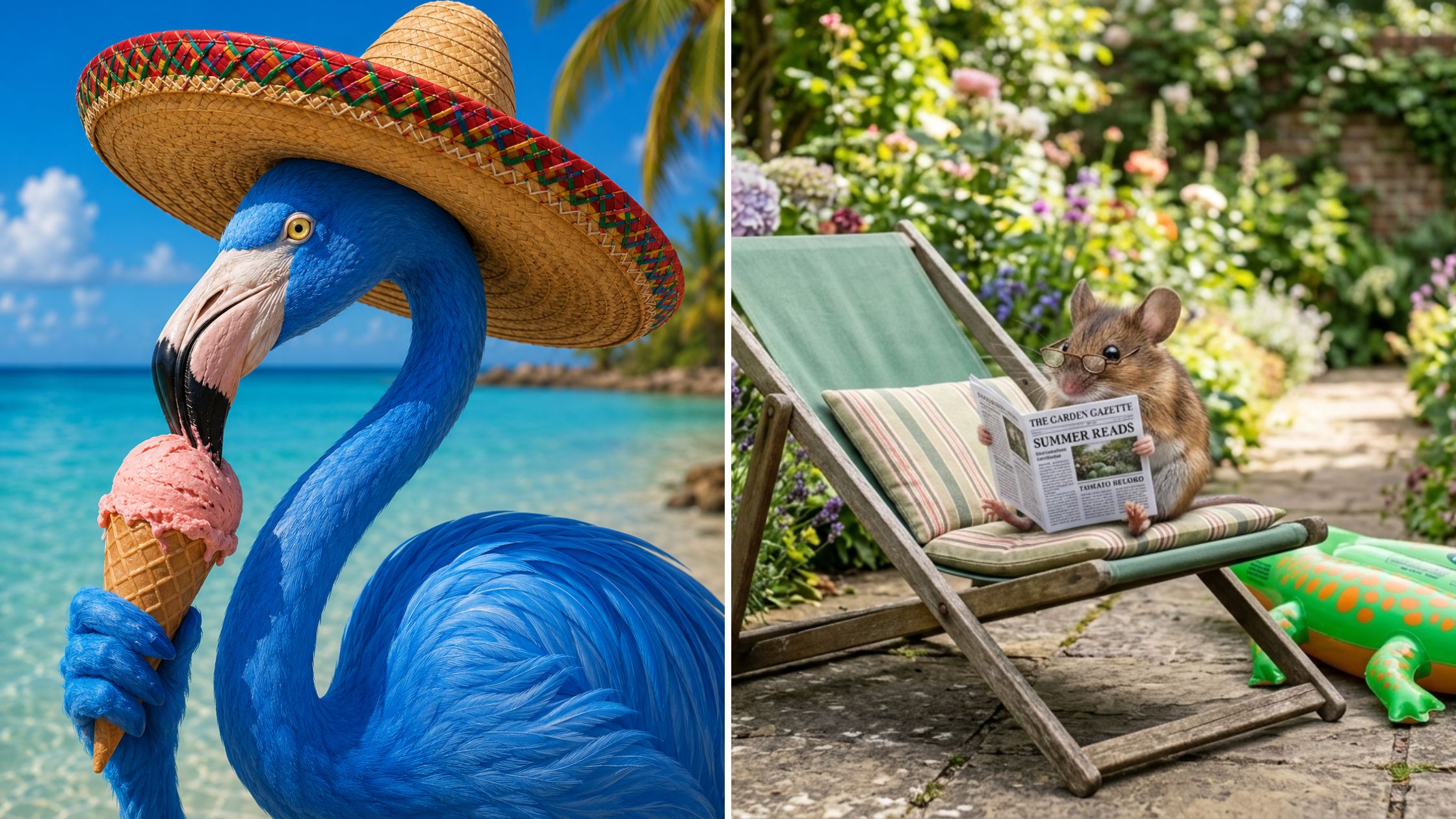
TIP: You can ask Student A to draw a picture first and then describe it, or you could adapt this to any topic by creating a collection of silly images to use as flash cards. Either memes you find online or use AI to create silly images for you, like these two:
Surviving the 15-Minute Spanish Lesson Planning Emergency
"Ooh, this question just gave me anxiety!"
That was Kellie Ann's exact reaction when I asked her how she handles those days when your brain is totally fried, you didn't have time to plan last night because you had parents' evening, and the bell is about to ring.
But once the initial panic cleared, Kellie Ann's go-to survival strategy is keeping things incredibly simple. She relies on digital tools and whole-group interaction rather than scrambling to print out stacks of worksheets.
You can pull up some digital flashcards or launch a quick live round of Quizlet or Blooket on your front screen. It takes about thirty seconds to set up, and it instantly gets the entire Spanish class quiet, competitive, and focused.
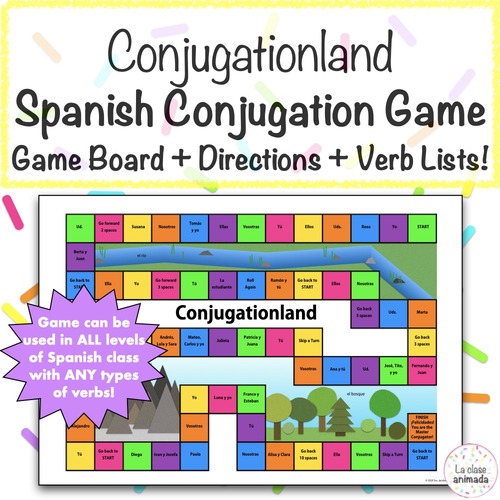
Once the kids are properly warmed up, Kellie Ann transitions into a review game like Conjugationland to get some heavy verb practice in. Or, if the energy in the room feels right, she scraps the formal slides entirely. Instead, she opens up the floor for an organic, whole-group conversation.
TIP: Try a simple weekend chat or This or That game, if you're stuck.
The takeaway here is pretty comforting for the rest of us. Surviving a zero-prep day isn't about spending your brief lunch break frantically typing up a brand-new worksheet. It's about leaning into a few dependable Spanish activities you already know work, and letting the kids do the talking.
A Quick Review Game Kellie Ann Recommends
One of the resources Kellie Ann frequently recommends for quick review days is her Spanish Conjugation Game.
Low-Stress Digital Tools for Quick Vocabulary Practice
When you are short on time, you don't want to create new materials from scratch. That is why Kellie Ann recommends pulling up pre-made vocabulary sets on standard digital platforms.
If you find yourself in this exact zero-prep scenario, my advice is to log straight into your teacher accounts and use these for unexpected emergencies or when you need to fill a 5-10 minute slot:
- Lean on public sets on Quizlet: Don't waste time typing out a new list. Type your current grammar or vocabulary unit into the public search bar. Chances are, another teacher has already made a perfect set. You can project the flashcards for a quick whole-class warm-up, or drop the link into your digital classroom.
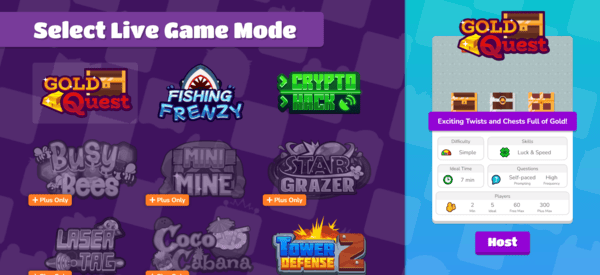
- Host a live game of Blooket: Search for a pre-made vocabulary set that fits your lesson or design a few, hit "Host," and pick a high-engagement mode like Gold Quest or Crypto Hack. It takes less than sixty seconds to get a join code up on your front screen. It instantly gets the entire room competitive and engaged in targeted Spanish activities without requiring a single page of text prep from you.
The Absolute Best Game for the Rest of the Year
If you haven't used Blooket before, it turns vocabulary and grammar review into a fast-paced game students can play on their own devices. The real appeal is that you can use the same content repeatedly while changing the game mode, which keeps review activities feeling fresh.
One week students might be competing in Gold Quest, and the next they might be defending towers or collecting resources. The language practice stays the same, but the experience feels different enough to maintain engagement.
For Kellie Ann, that's what makes it such a reliable classroom tool. It's quick to set up, easy to adapt to almost any topic, and consistently gets students participating.
But if your school has recently banned mobile devices or other gadgets in class and you can’t use tools like Blooket, don’t worry — you can still create the same kind of high-engagement practice with ready-to-print Spanish games and resources that are designed for exactly these situations.
Meet the Teachers: Series Spotlight
Love learning how other secondary teachers run their classrooms? Here are some of my other Meet the Teacher interviews! Check out these other posts for more inspiration, routines, and low-prep ideas:
- Low-Prep Engaging Spanish Activities for "Emergency" Planning with Alison, from La Señora Q
- Advanced Spanish Class Activities: Game On for a Confident Classroom with Language at Play
- From "Deer-in-the-Headlights" to Confident Speakers in Middle School Spanish with Marilyn Pichardo from Perfect Plans by Marilyn
Breaking the Sunday Scaries: How to Actually Leave Work at School
Let's talk about something every teacher struggles with: the never-ending to-do list. Between grading, lesson planning, and answering emails, it's far too easy for work to spill into evenings and weekends.
When I asked Kellie Ann for her best tip for protecting her personal time, her answer was surprisingly simple:
"Using the time you have wisely," she says. "I make myself a to-do list each morning and plan out what I can get done before school, during my prep period, and after school. I will sometimes even set a timer for myself for a certain task to ensure that I am focusing on it. A to-do list though really lays out for me what I need to get done and helps me stay focused!"
The key isn't finding extra hours in the day. It's being intentional with the time you already have.
Instead of keeping one overwhelming list in your head, break your tasks into smaller chunks throughout the day:
- Before school: Set up materials, update your agenda, and get organized for the day ahead.
- During your prep period: Focus on tasks that require concentration, such as grading or lesson planning.
- After school: Spend a few minutes preparing for tomorrow so you can start the next day without scrambling.
It's simple advice, but it stops the school day from running away from you.
How Staying Focused Saves Your Sunday
When you use timers and hyper-specific lists, you stop losing ten minutes here and fifteen minutes there to mindless scrolling or chatting in the hallway. It means when the final bell rings on Friday, your future Spanish class is already planned out for Monday morning. You can walk out the door carrying nothing but your keys.
The Quick-Choice Showcase: Inside Kellie Ann’s Teacher Brain
To wrap up our conversation, I asked Kellie Ann a few rapid-fire questions about teaching, travel, and where she finds inspiration.
As teachers, we make roughly four thousand decisions a day, so it’s always fascinating to see what a colleague instinctively picks when forced to choose between two great things.
Movies & Videos or Songs?
Movies and videos. She loves giving students exposure to authentic language through visual context and real-world conversations.
Brain Breaks or Power Through?
Brain breaks. A short reset can completely change the energy of a class.
Tacos or Paella?
Tacos, without hesitation.
Winter in Argentina or Summer in Spain?
Summer in Spain.
Bonus Spanish Resources for Your Next Lesson Plan
To help you put Kellie Ann's low-stress philosophy into practice tomorrow, we’ve put together two ready-to-use resources that will save your upcoming prep period and keep your high schoolers engaged in class.
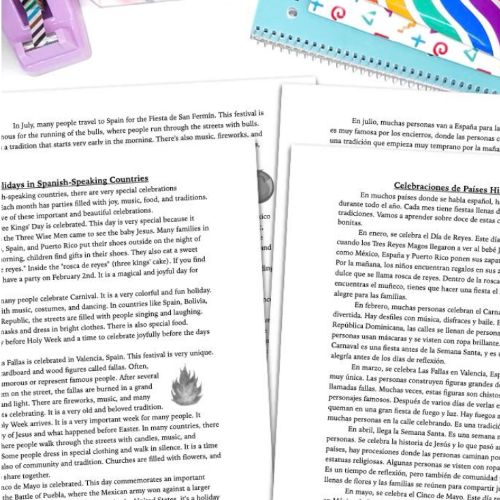
Holidays in Spanish-Speaking Countries
If you want to sneak a little more culture into your week without adding hours to your lesson planning, Kellie Ann is also sharing a free Holidays in Speaking Countries Reading. Perfect for cultural sessions or for reading practice!
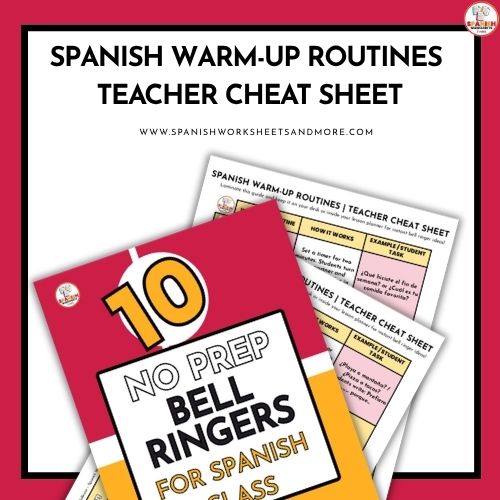
A Freebie From Me: Bell Ringer Ideas Cheat Sheet
Print, laminate, and keep in your folder for instant inspiration!
Finding Your Own Classroom Flow
One thing that stood out from my conversation with Kellie Ann was how much successful teaching comes down to systems rather than perfection.
Her students see a class that seems to end at exactly the right moment, but behind that is years of experience, flexible planning, and a handful of reliable activities she can fall back on when needed. Whether she is building classroom trust, leading a culture discussion, or managing a last-minute lesson, the goal is the same: keep students engaged without making teaching harder than it needs to be.
The good news is that none of us have to reinvent the wheel every week. A few dependable activities, realistic expectations, and a willingness to adapt when lessons take unexpected turns can go a long way.
If there is one takeaway from Kellie Ann's approach, it's this: focus on what works consistently, and give yourself permission to keep things simple.
Get More Practical Ideas From Kellie Ann
Head over to the La Clase Animada TPT Store to grab Kellie Ann's favorite time-saving resources, or visit her blog for brilliant classroom management inspiration.
Find More Time-Saving Spanish Resources and Worksheets
Protecting your peace outside of school isn’t selfish — it makes you a better, more energetic teacher in the classroom. If you’re looking for ways to cut down planning time even further, take a look at my low-prep Spanish games and cultural lessons. They’re designed to give you your prep period back and make it easier to leave work at school at the end of the day.
0 comments