Have you ever stood by your door as the morning bell rang, watching a wave of high-energy high schoolers stream in? Meanwhile, your brain is frantically scrambling to manage upcoming Spanish classroom activities, organize lesson plans, and support both heritage speakers and advanced learners at the same time
It’s a beautifully chaotic moment that every secondary teacher recognizes, but establishing a predictable Spanish daily routine can actually give you your breath back instead of stealing it away.
Finding the right balance between managing a room full of energetic teenagers and delivering meaningful lessons is tough, but the right structure can completely shift the energy of your room from chaotic to calm.
Let's get a few tips from Letty García, the brilliant teacher-author behind First Generation Dreams.
More...
Today, as part of this Meet the Teacher series, it's my pleasure to introduce you to Letty. Based in Colorado with over 13 years of classroom experience, Letty teaches grades 9–12.
As a native speaker, she brings an authentic passion for both the beauty of the culture and the structure of the language to her classroom every day.
Shall we dive into her story, her absolute best classroom secrets, and the routines that keep her high schoolers connected?

"I want to help other native/heritage speakers preserve their language and be proud of it, and I want to help others learn it."
Teaching Rooted in Spanish Heritage and Heart
For Letty, teaching Spanish isn't just a job—it's a mission. She is deeply passionate about helping heritage learners preserve their language and feel genuinely proud of their roots. But her love for the language extends to second-language learners too; she simply thrives on helping everyone unlock the ability to communicate.
When she isn't in the classroom, Letty is either at home cuddling with her four-year-old, trying to soak up all that sweetness while they're still young, or doing something else she truly enjoys: making high-quality learning resources for other teachers. Talk about a true teacher at heart!
Connecting Culture and Storytelling in Spanish Class
When asked about her favorite cultural topic to teach, Letty picked the same topic Alison (Señora Q) chose in her Meet the Teacher interview. Letty doesn't hesitate: Día de los Muertos.
"It is definitely Día de los Muertos because of its magnitude, the meaning behind it, and because of the endless options of colorful crafts we get to make in all of my classes."
What makes Día de Los Muertos so powerful is how beautifully it scales. Whether she is working with novice students or a high-level group, the depth of the holiday allows for rich discussion, authentic reflection, and hands-on creativity that bring real connection and emotion to the classroom.

If you are looking for more ways to bring cultural celebrations into your own lessons, you can find my 9 Spanish festivals to teach in class here to help spark those same connections.
A Spanish Lesson That Went Perfectly
One thing I'm always curious about when I chat with other teachers is finding out when things went well, so I can learn from their success. For Letty, one of her favorite classroom memories came from a project where her students interviewed a family member using guided questions and brought in an artifact—a photo, a recipe, or a special object—as a visual support.
That day, the class formed a structured storytelling circle. Students shared their family histories in Spanish, intentionally using transition words they had practiced all week.
Why This Format Hits the Sweet Spot
There is so much to love about this activity. It completely takes the pressure off that dreaded "forced" speaking we often see in high school. Allowing students to hold a physical object from home means they bring a piece of their own world into the classroom and have an instant confidence booster right in their hands. They don't have to search their brains for what to say because the visual reminder is right there.
But the real magic is the circle itself.
By keeping it informal instead of making students stand alone at the front of the room, it's a lot more student-friendly and everyone feels a bit safer. At the end of the day, we’re all wired to care about real stories, and this shifts the whole vibe from just memorizing vocabulary to sharing real lives.
Meet the Teachers: Series Spotlight
Love learning how other secondary teachers run their classrooms? Here are a few more Meet the Teacher interviews packed with inspiration, routines, and low-prep ideas:
Letty’s #1 Spanish Teacher Tip: Embrace the Warm-Up
When I asked Letty about her best piece of advice for a colleague experiencing burnout, her answer was actually very simple: establish a rock-solid Spanish daily routine using bell ringers.
"I used to not pay attention to them in my first years. Back then, my classes did not feel organized since the beginning, and there was a lack of an effective routine. Once I started... things changed drastically for me in a positive way."
Why a Clear Calentamiento Routine Completely Changes the Vibe
There are many reasons why starting your Spanish class with a warm-up is best practice:
It sets an immediate boundary: The second the bell rings, the routine takes over. It cuts out the repetitive "What are we doing today?" chatter before it even starts because the expectations are already on the board.
It channels that high school energy: Instead of walking into a room with unstructured downtime, your students have a specific focus right away, transitioning them smoothly into academic mode.
It buys you a pocket of peace: While students are independently completing their calentamiento, you actually get a moment to catch your breath. You can take attendance or upload a last-minute link to your learning platform without feeling rushed.
You can quietly check in on your kids: Most importantly, those first four minutes give you a quick window to connect. You can slip away to whisper-check on a student who walked in looking a bit down or stressed out before the main lesson even begins.
Are you using warm-up routines to anchor your classes yet?
Full-Year Spanish Daily Routine Slides
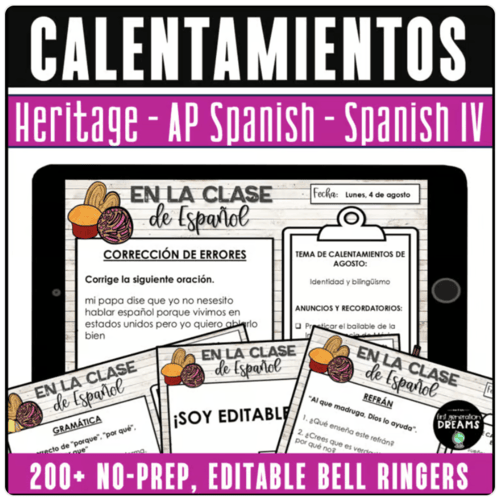
If you want to bring that same peace and structure to your own classroom, Letty has done the heavy lifting for you. Her Calentamientos en español for Advanced and Heritage speakers is a set of 200+ editable slides of warm-ups designed specifically for the secondary classroom.
Maximizing a Tight Prep Window with BASTA
When morning meetings run over or there is only a brief 15-minute window to get a lesson ready before a wave of high schoolers walks through the door, maximizing every minute is essential.
So when Letty is running short on prep time, she relies on a brilliant, zero-prep strategy that keeps her advanced students completely engaged without requiring hours of planning: she simply reviews a core concept she wants her students to remember, and then pairs it with a game her students absolutely love—BASTA—which requires no preparation at all.
How to Use BASTA in Your Class
If you aren't familiar with it, BASTA (also known as Scattergories or Tutti Frutti in some Spanish-speaking countries) is a fast-paced vocabulary game. It requires zero printing, zero slides, and zero setup. All your students need is a blank piece of paper and a pen, making it the perfect activity for a low-prep Spanish lesson plan.
Here is how you can structure a game of BASTA:
- Choose the topic: If you want to do it like Letty, do a tiny bit of prep on a core concept—whether that’s a tricky grammar structure, transition words, or a recent vocabulary theme—and open the class with a quick review.
- Set the categories: Next, get students to draw a simple grid on their paper. The sweet spot here is choosing 4 to 5 categories; any fewer and the rounds end too quickly, but any more and it can drag out. For an advanced or heritage class, you can easily level up the categories across the top to match your review instead of using basic topics like colors or animals. Try mixing parts of speech, pulling from your current unit, or leaving one broader category as a safety valve so they don't get completely stuck (e.g., Verbo en el subjuntivo, Adjetivo avanzado, Un problema social/global, País hispanohablante, or Profesión).
- The Race: Call out any letter of the alphabet. Then students race against each other to write a word that starts with that letter for every single category.
- The Stop: The very second a student fills in all of their boxes, they yell "¡BASTA!" and everyone else has to drop their pens.
- The Review: After the stop, use this time to review the answers together as a class. It's the perfect opportunity to comment on their creative choices, clear up any spelling or grammar misconceptions, and highlight advanced vocabulary that students shared.
- Then repeat with a new letter!
By centering the lesson around a game like BASTA, you can walk into the room with total confidence, knowing your students are reviewing language skills and having fun while you protect your limited prep time

Letty's "Desert Island" Spanish Activity: Mystery Puzzles
If you told Letty she could only choose one type of activity to use with her classes for the rest of the year, her answer would be immediate: Mystery Puzzles.
Why Spanish Mystery Puzzles Rule the Classroom
- They put students in the driver's seat: Letty loves them because students are able to actively monitor their own learning. And instead of passively copying answers, they have to think critically to answer the questions and figure out what they did wrong.
- Instant feedback removes the guesswork: Students receive immediate visual feedback as they work. They can instantly see if they are on the right track, which completely eliminates the frustration of completing an entire assignment incorrectly before finding out.
- They save you time: Because these games are entirely self-correcting, you don't have to spend ages grading stacks of identical worksheets, but tell your students to come to you when they really can't figure out why their answers are wrong.
I'm also a huge fan of Mystery Picture games and have great fun designing the games myself. If you want to save yourself hours of marking time, check out my Growing Bundle of Mystery Picture and Self-Checking Games and try the freebie at the end of the blog post.
Spanish Verb Conjugation Charts Freebie
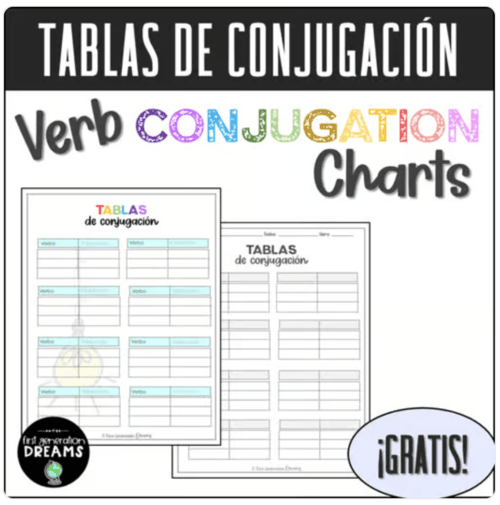
We all know that verb charts can sometimes feel dry, but having a clean, predictable framework makes a world of difference for students trying to wrap their heads around tense changes. Letty is generously sharing a sample of her FREE Spanish Verb Conjugation Charts to help your students organize their thoughts.
Includes both a print version and a digital version!
The Teacher Lightning Round: Letty’s Top Picks
With her core strategies set, here is a quick look at Letty’s top choices for keeping her classroom culture vibrant and fun:
- Brain Breaks vs. Movement: Letty votes for intentional brain breaks to reset focus.
- Tacos vs. Paella: Tacos, hands down!
- Authentic Resources: She relies heavily on movies and videos to give her students real-world language exposure.
- Dream Vacation: Spending an entire summer exploring Spain.
- Professional Growth: She hooks her earbuds in and gets her best teaching ideas from podcasts.
Bringing It All Back to the Heart of the Classroom
At the end of the day, teaching high school Spanish isn't just about getting through the next grammar point or checking off a lesson plan. It’s about creating a space where students feel seen, heard, and deeply connected to the language—whether they are stepping into it for the very first time or working hard to preserve their roots.
As Letty reminds us, building that kind of environment doesn't require you to sacrifice your sanity or your weekends. By leaning into simple, reliable structures like daily warm-ups, you buy yourself the time and energy needed to show up as your best, calmest self for your kids.
A massive thank you to Letty García for letting us look inside her room and sharing her experience!
If you want to explore more of her incredible resources for heritage and advanced learners, make sure to visit her Teachers Pay Teachers store, First Generation Dreams, and show her some well-deserved colleague love.
Until next time, take a deep breath, lean into your routines, and ¡buena suerte en las clases!
A Freebie From Me: Daily Routine & Reflexive Verbs Mystery Picture
If you love the idea of self-checking grammar games, check out this Mystery Picture game and get your students to practice grammar without complaints!
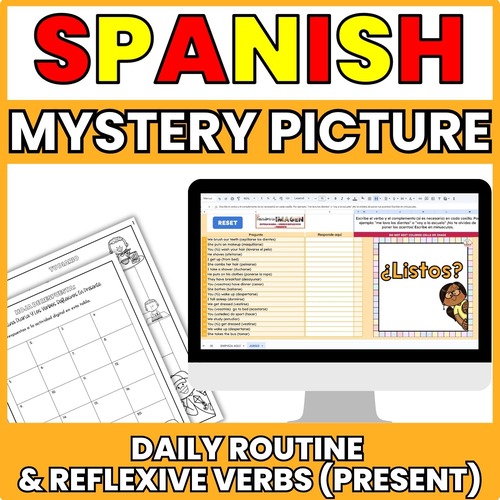
Please note this only works with Google Sheets, not Excel.
Want more low-prep Spanish resources?
If you want to add some low-prep bingo games to your Spanish resources toolkit, you can check out my collection of Bingo resources here or browse my store Spanish Worksheets and More for more time-saving activities your students will love! Don't forget to visit and follow me!
0 comments