Have you ever wondered why some Spanish classroom activities seem to stick with students for years, while others are forgotten by the time the bell rings? After 17 years in the classroom, Alison from SeñoraQ has found that it often comes down to making the content relevant enough that students can easily make connections between the lesson and their own lives.
(And if she ever decides to step away from the classroom? She’d likely be a novelist—she’s always wanted to write a book, and who knows? Maybe she will one day.)
Whether you are teaching 7th grade or high schoolers, you know the pressure of balancing curriculum mandates with the need for engaging Spanish lessons. I am excited to share Alison’s perspective on keeping the spark alive while building a Spanish classroom that feels sustainable.
Keep reading to find out how she does it.
More...
Disclosure: This post may contain affiliate links. As an affiliate for Amazon and other companies, I earn from qualifying purchases. This means that if you click on a link and make a purchase, I may earn a small commission at no additional cost to you.
"I saw my mom connect with people through Spanish and wanted that for myself — one middle school class later, I was completely hooked."
Finding the Magic: Why We Teach
Have you ever looked at a student who is finally "getting it" and thought back to the moment you first felt that same spark? For Alison, that moment happened at home. Growing up, she watched her mother navigate different worlds simply by speaking another language. It wasn't just a skill; it was a way to connect with people who would otherwise be strangers.
That curiosity eventually landed her in a middle school Spanish classroom, where the subject quickly became her favorite part of the day. Those early years left such an impression that she knew exactly what she wanted to do: pay that inspiration forward by becoming the kind of teacher who makes language learning feel like an open door.
Spanish Culture Activities: Making Them Real (And Relevant)
When it comes to cultural topics, Alison’s favorite to teach is Día de los Muertos. Because many of her community members are originally from Mexico, her town hosts wonderful celebrations and events. She loves that she can teach her students about the holiday in class and then take them out to experience the festivities firsthand right in their own community.
But for many of us, we don’t always have that luxury of a nearby festival or a local community with deep cultural roots to tap into. It can be a challenge to bring Spanish and Latin American culture to your class without relying solely on a textbook or a video clip. However, the goal remains the same: moving from "learning about" a culture to actually "feeling" it. Whether it's bringing in music, connecting with authentic recipes, or exploring digital tours of international celebrations, the aim is to pull the culture off the page.
If you are looking for more ways to bring cultural celebrations into your own lessons, you can find my 9 Spanish festivals to teach in class here to help spark those same connections.
Her Favorite Spanish Class Game: Scrambled Sentence Puzzles
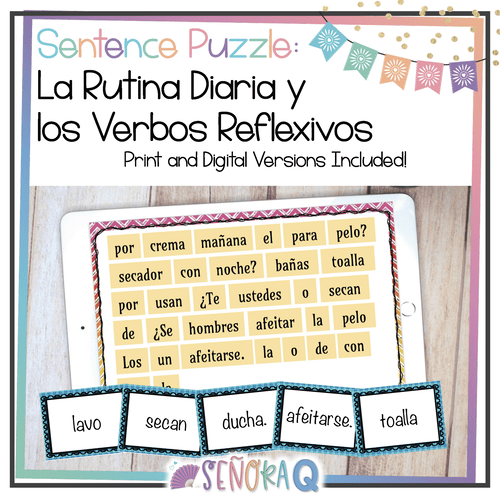
If Alison could only use one strategy for the rest of the school year, it would be the Scrambled Sentence Puzzle. It is tactile, collaborative, and forces students to focus on how sentences are built and how verbs agree, all without it feeling like a dry grammar drill.
Here is how she does it:
- Create several sentences related to the current unit or topic.
- Write one word of each sentence on an index card.
- Put the cards for each set into a plastic baggie.
- Repeat the process until you have enough sets for students to work in groups of 2-3.
In class, students take the jumbled cards and work together to re-create the sentences. It’s incredibly student-centered, and there’s something about the tactile nature of moving the cards that makes the work more memorable.
You create these yourself, or grab a resource already created by Alison:
Scrambled Sentence Puzzle
- Printable Cards: Two versions.
- Digital Versions: Three levels of difficulty.
- Everything Else: Clear teacher instructions and a full answer key to make your life easier.
Why the "Scrambled Sentence" Puzzle Works
I personally love this idea because it turns potentially dry grammar into a physical, hands-on challenge. While it isn’t exactly "no-prep" (you do have to print and cut the cards!), it is a fantastic investment for your classroom.
Here’s why it’s worth the effort:
- Tech-Free Engagement: It gets students away from screens and into kinesthetic learning.
- Immediate Feedback: Because they are physically moving pieces, students spot their own mistakes much faster than they would on a flat worksheet.
- The "Aha!" Moment: It turns grammar into a puzzle. There is a real sense of satisfaction when the whole sentence makes sense!
- Long-Term Value: Once you’ve prepped a set of baggies, you can reuse them year after year.
To keep these from becoming a jumbled mess in your cupboard, I highly recommend using some plastic photo storage boxes.
Low-Prep Spanish Engaging Activities for "Emergency" Planning
We’ve all been there—the morning where everything goes sideways and you have zero time to prep a masterpiece. When I asked Alison what she would do if she only had 15 minutes to plan a class, her strategy was all about keeping it simple and effective.
She sticks to "universal" activities that work with almost any topic. For example, one of her favorite activities for a quick vocabulary refresh is a Bingo game.
And I must say I’m also a huge fan of Bingo too—there is just something about those bingo dabbers that everybody loves! But, in the Spanish classroom, bingo is a highly engaging game, works for almost any topic, and requires almost no setup.
Yes, I know it requires some printing and your head of department might not be happy! But if you print them once and laminate them—or use plastic sleeves like the ones I recommend in my Spanish classroom essentials blog post here, you can reuse them again and again!
Lessons That "Click": Finding Relevance
"To be honest, I'm not sure I've ever had a lesson go 100% perfectly!  But for a lesson that came close, I had a really interesting, relevant topic—technology and its role in society—and used Marco Denevi's microcuentos Apocalipsis and Génesis.
My students were engaged because the topic was so relevant and they could easily make connections between the stories and their own lives. It made for a great discussion!" — Alison, SeñoraQ.
Alison also loves games like Conjugation Relay Races or Silent Ball, which are perfect for getting students moving without needing a stack of worksheets. But her real secret weapon? Letting the students do the heavy lifting. Instead of spending hours prepping a lecture, she’ll come up with a solid project prompt and let the students take the lead during class.
The Best Advice for New (and Seasoned!) Teachers
When I asked Alison for her best tip on reclaiming your weekends, her answer was simple but effective: Try to leave your work at school. She’s a big believer in not even bringing the marking or the laptop home if you can help it. Her approach really echoes what Jamie mentioned in our chat for this series—it’s all about being intentional with your time so you don't feel like you're "always on."
As Alison points out, a teacher's to-do list is never-ending, and we could easily work 24/7 if we let ourselves. By keeping work in the classroom, she makes sure her home stays a place to actually relax.
If you’re struggling to make the "clean break," here are a few ways to start:
- The "Top 3" Rule: Before you leave school, write down the three most important things you must do tomorrow. Once those are on paper, give yourself permission to stop thinking about them.
- Leave the Bag: If you find yourself bringing your school bag home "just in case" but never opening it (we've all been there!), try leaving it at your desk for one night. It’s a huge mental weight off your shoulders.
- Email sunset: Set up a time after which you don't look at your email and do not make your work email accessible via your mobile phone.
Get to Know Alison: The Quick-Fire Round
To get a better sense of her classroom vibe, as I did with my other teacher friends Jamie and Bethany in previous interviews, I asked Alison to pick her favorites in a quick "this-or-that" round. Here’s a peek into her world:
The Classroom Energy: She’s Team Brain Breaks to keep the momentum going.
The Menu: It’s Tacos over tapas!
The Media: She loves using Movies and Videos to bring the language to life for her students.
The Dream: A Summer in Spain (wouldn’t we all?) instead of Winter in Argentina.
The Inspiration: When she needs fresh ideas for her classroom, she turns to Books.
Connect with Alison
If you loved these ideas as much as I did, make sure to follow her and see more of her high school resources over at her TpT Store: Señora Q.
Free Spanish Resources for Your Classroom
Alison and I both wanted to share a couple of resources to help you save time:
A freebie from Alison
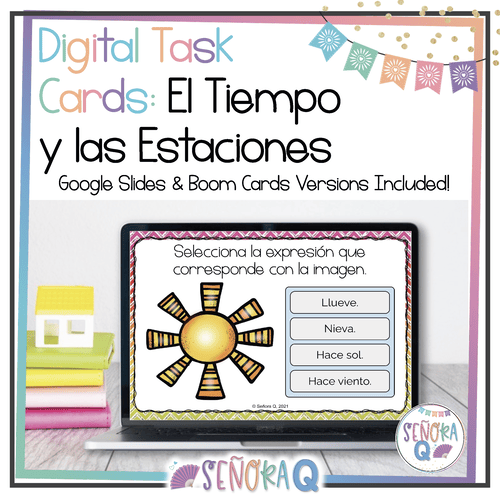
If you want to see exactly how Alison keeps students engaged with interactive tools, she is sharing her Spanish Weather and Seasons Digital Task Cards.
This is a set of digital cards (available for both Google Slides and Boom Cards) that turns weather vocabulary into a challenge.
A Freebie From Me: Daily Routine and Reflexive Verbs Mystery Picture Game
If you love the idea of having one more resources to work with reflexive verbs and daily routines and want something digital and self-checking, this is it. Perfect for engagement and, best of all, you don't have to spend any time grading anything.
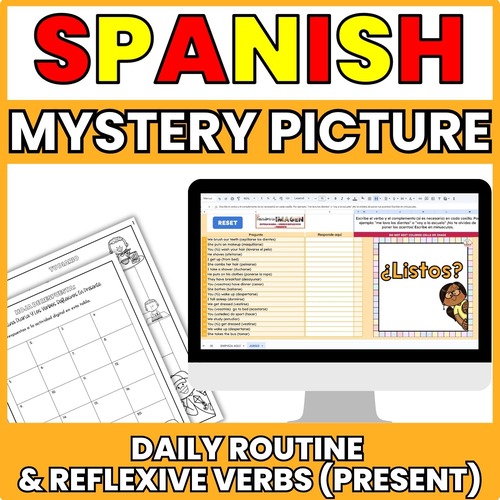
Please note this only works with Google Sheets, not Excel.
Your Turn to Spark the "Aha!" Moment
It’s easy to feel like the only way to be a "great" teacher is to spend every weekend planning and every evening grading. But as Alison has shown us the real magic happens when we find the balance between engaging, tactile lessons—like those Scrambled Sentence Puzzles or her digital cards—and protecting our own time so we can show up with energy and passion.
Whether you start by leaving your laptop at school this Friday or by printing a set of Bingo cards to keep in your "emergency" drawer, remember that the most important resource in your classroom isn't a textbook or a fancy app—it’s you.
Want more low-prep Spanish resources?
If you want to add some low-prep bingo games to your Spanish resources toolkit, you can check out have my collection of Bingo resources here or browse my store Spanish Worksheets and More for more time-saving activities your students will love! Don't forget to visit and follow me!
0 comments